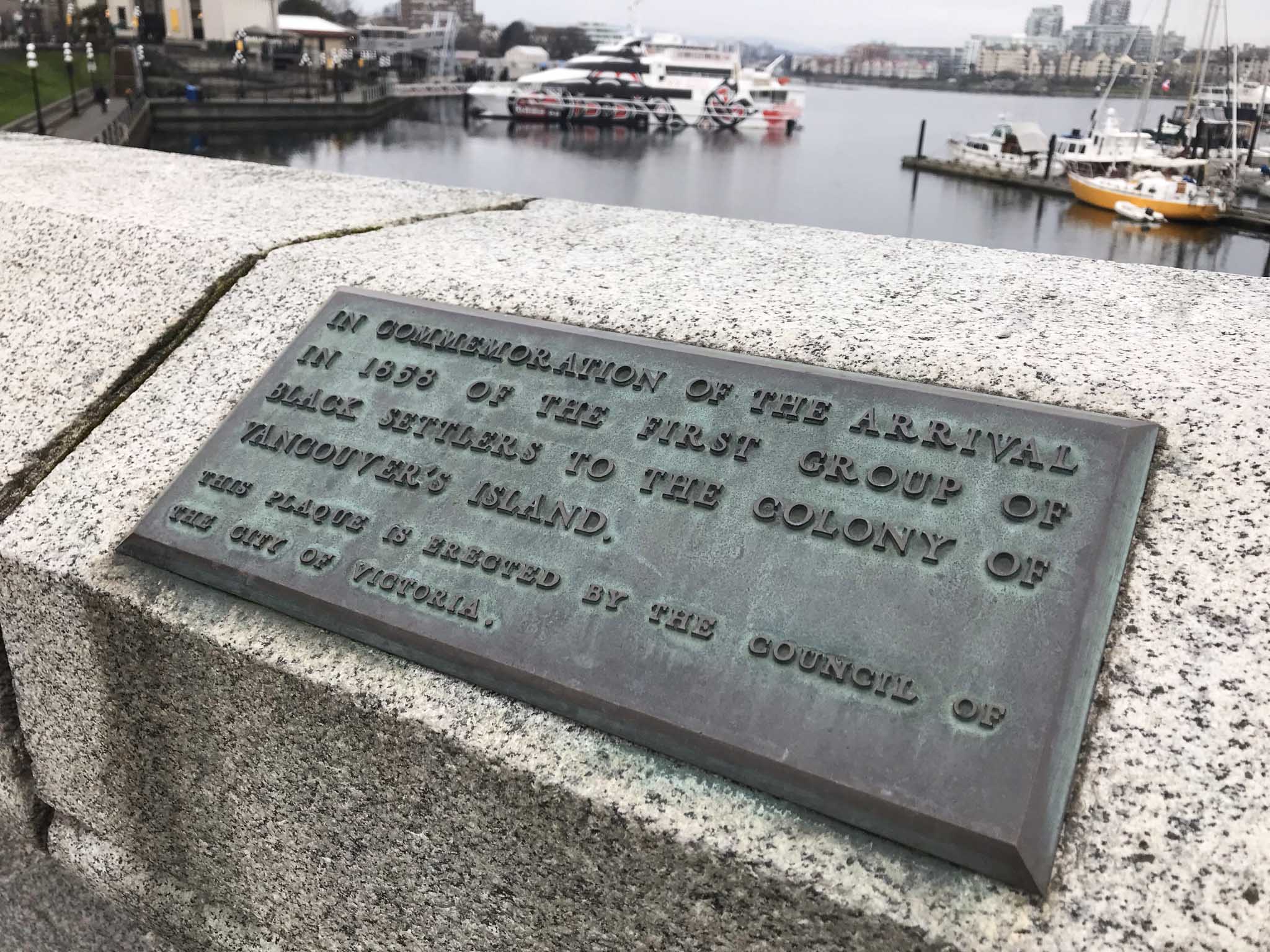
During the 1850s, racial animosity was growing throughout the American state of California. In 1852 the state enacted legislation that permitted the arrest of escaped slaves, and in 1858 the California State Legislature passed a law banning Black Americans from immigrating to the state, although the bill was never enacted. Fearing for their well-being and political rights, the Black community in the city of San Francisco began to explore alternatives for settling elsewhere.
Aware of their plight, Governor James Douglas sent an invitation the Black community of San Francisco in 1858, wanting to increase settlement in the Colony of Vancouver Island to discourage a possible U.S. annexation. Douglas himself was of mixed ancestry, having been born in Demerara, British Guiana (now modern-day Guyana), to a Scottish father and a free woman of Barbadian-Creole ancestry.
Once the scouts had confirmed that the colony was willing to give them equal political and economic rights after they became British subjects, several hundred Black Americans soon arrived to settle throughout Victoria, Saanich, and Salt Spring Island. On April 25, 1858, a scouting party of 35 people from San Francisco’s Black community disembarked the steamship Commodore in Victoria’s harbour. Many of these settlers were free men and women from the northern and southern U.S., while others included escaped slaves and travelers looking to make their fortune.
Unfortunately, these early settlers continued to face racism and discrimination from the colony’s white residents. In 1861, when members of Victoria’s Black community were denied membership in Victoria's Volunteer Fire Department, they sought the support of Governor Douglas to form the Pioneer Rifle Corps, a militia that prepared for war with the U.S. during the San Juan Islands crisis. Despite being the senior military unit in the colony, they were not allowed to march at Douglas' retirement or the installation of his successor, Arthur Kennedy. Believing that they would never receive the respect they deserved, the group disbanded. On May 9, 1865, the captain of the Pioneer Rifle Corps wrote to the Colonist, saying that "having as much human nature under their dark skins as others of a paler hue, they cannot forget the snubbing they received on that occasion."
Shifting conditions in the late 1860s drew many Black settlers to return to the U.S. Gold on the mainland Colony of British Columbia had become much more challenging to find, causing considerable economic hardship for the many residents who used to sell goods and services to the gold miners. At the same time, the American Civil War had ended in 1865, and slavery was abolished soon afterwards. While many of the early Black settlers enjoyed their new lives in B.C., others were drawn by the emerging opportunities for Black Americans in the U.S. and chose to return to their former homes.